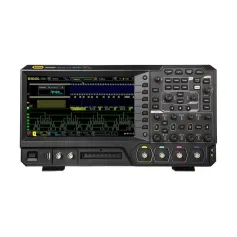
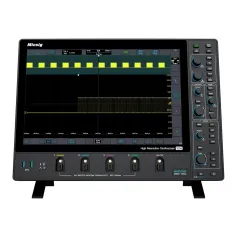
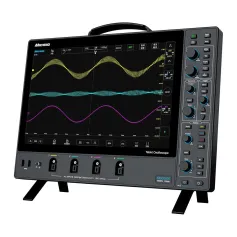
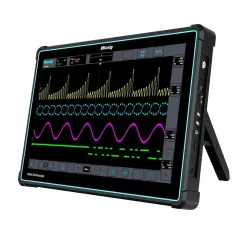
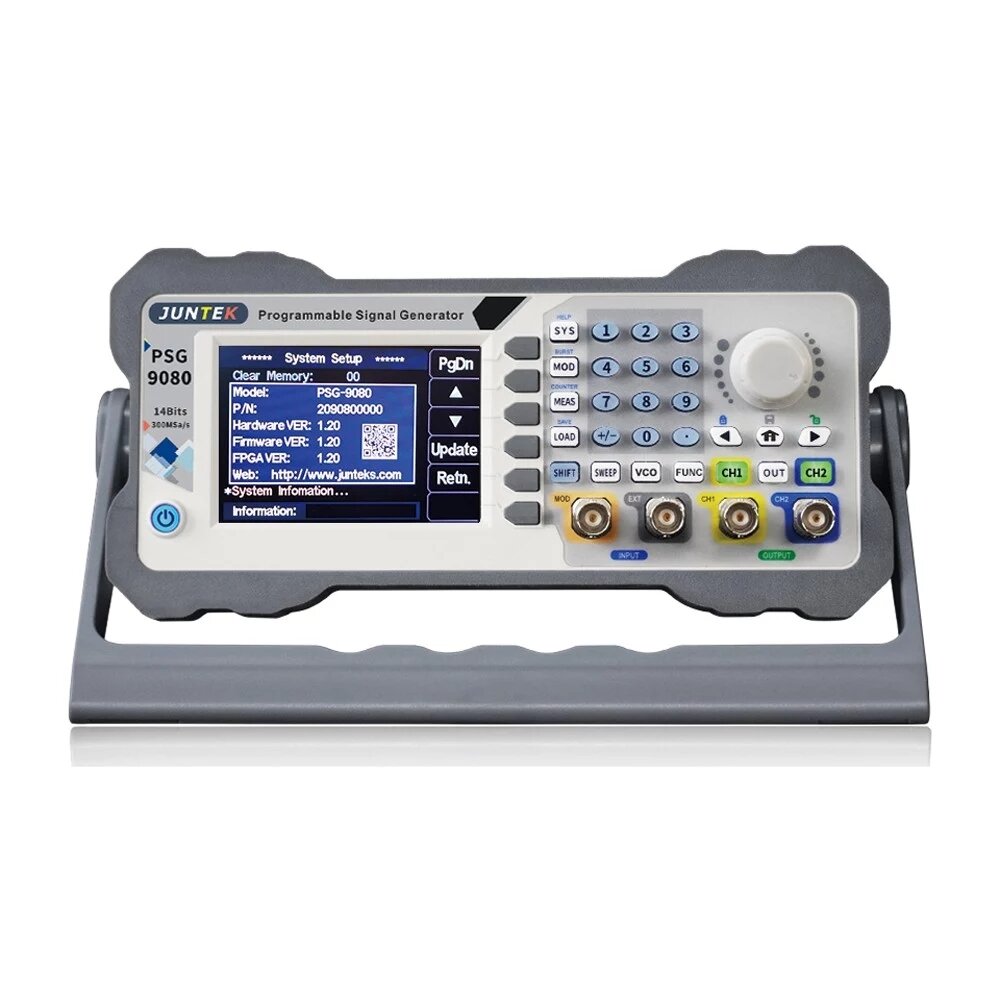
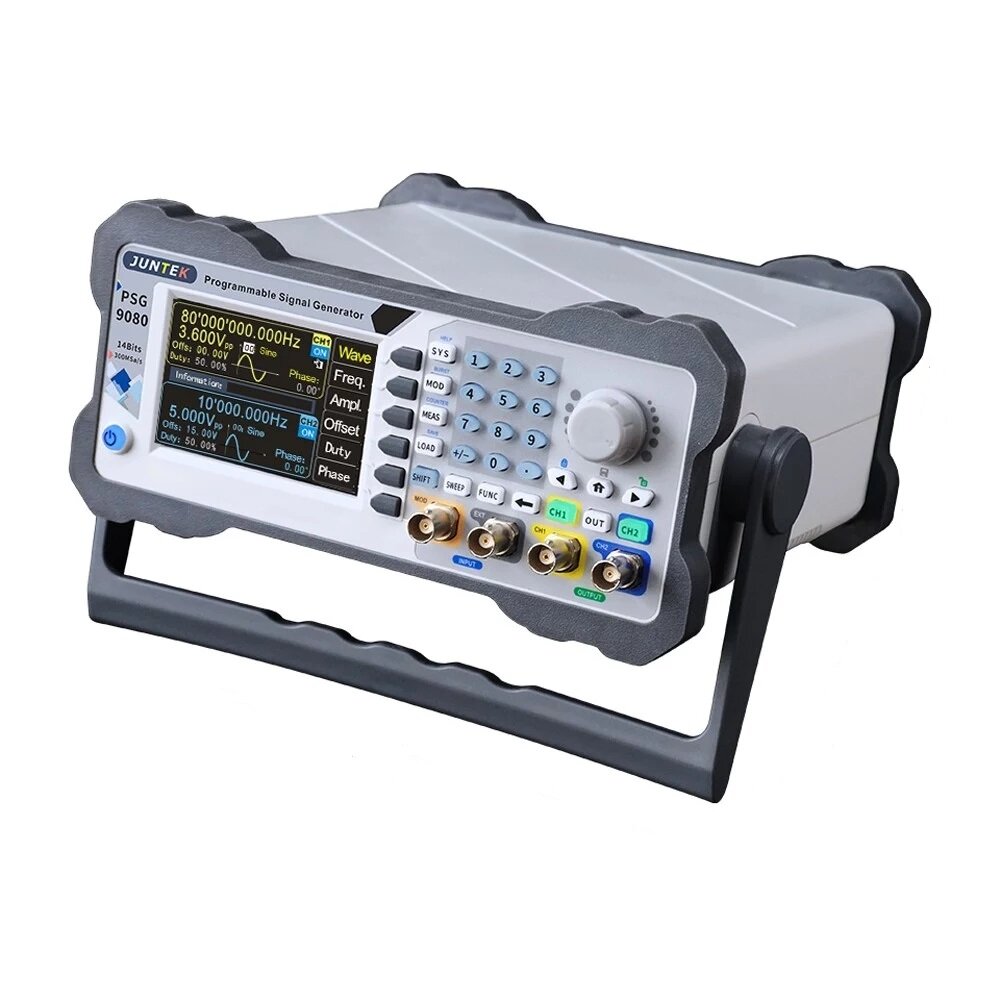
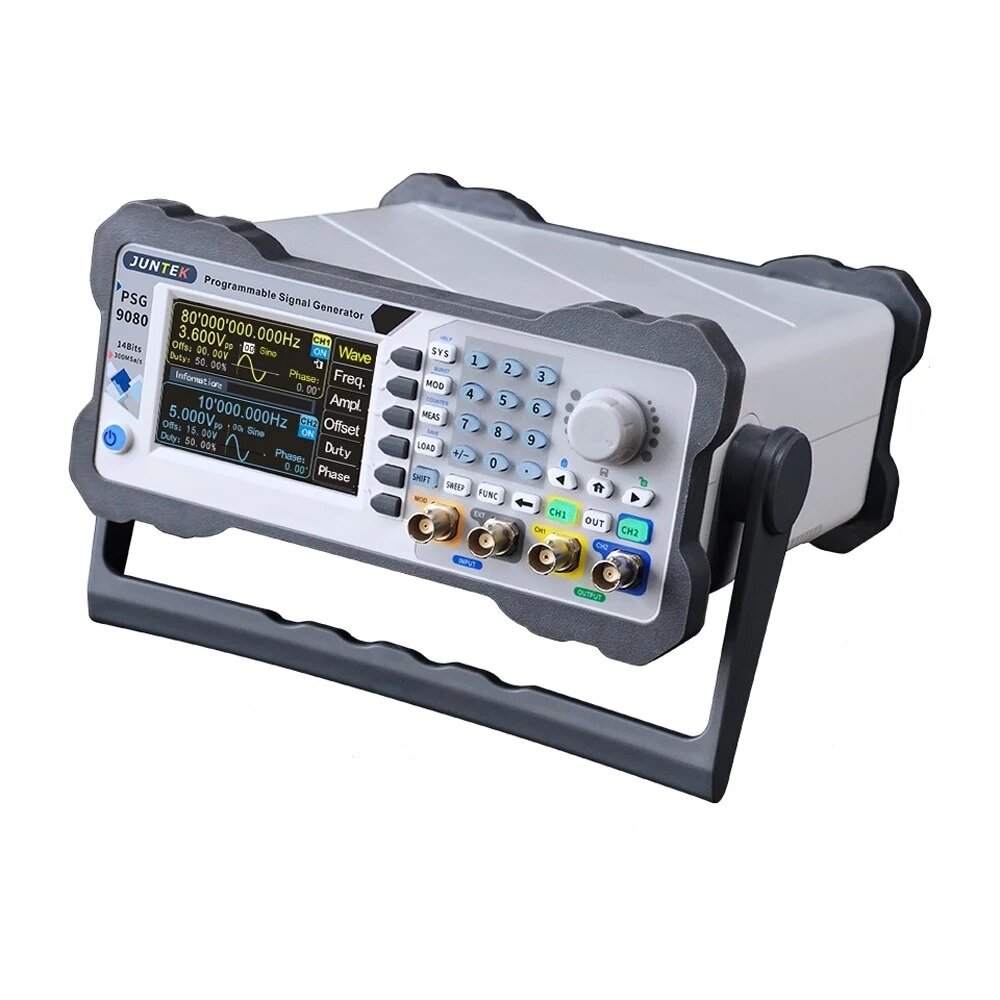
JUNTEK PSG9080 1nHz-80MHz Signal Generator Dual Channel Programmable Function Arbitrary Wave Source Frequency Modulation Amplitude Modulation Voltage Control Frequency Meter
დაბრუნება მიიღება 40 დღის განმავლობაში მიღების დღიდან. ინდივიდუალური ნივთები არ შეიძლება დაბრუნდეს. საჩუქრის ბარათით შეძენილი ნივთები მხოლოდ გაცვლა შეიძლება.
უფასო საჩუქარი
მოგესალმებით Roymall-ში, თქვენს პრემიუმ საჩუქრების მაღაზიაში. ჩვენ ძალიან ვაფასებთ თქვენს მხარდაჭერას და მადლობის ნიშნად გთავაზობთ უფასო საჩუქარს ყოველ შეძენაზე.მზად ხართ გაეცნოთ ჩვენს კოლექციას? დაათვალიერეთ ჩვენი არჩევანი, განათავსეთ თქვენი შეკვეთა და დაელოდეთ თქვენს უფასო საჩუქარს თქვენი შეძენისთანავე.
მიტანის პოლიტიკა
ჩვენ ვამუშავებთ შეკვეთებს 2 დღის განმავლობაში.სტანდარტული მიტანის დროა 5-7 სამუშაო დღე.მიტანის დრო შეიძლება განსხვავდებოდეს დანიშნულების მიხედვით.
1. დაბრუნების პოლიტიკა
ჩვენ ვიღებთ მხოლოდ იმ ნივთების დაბრუნებას, რომლებიც შეძენილია roymall.com-დან.უფასო საჩუქრები არ შეიძლება დაბრუნდეს.ნივთი უნდა იყოს გამოუყენებელი და ორიგინალურ შეფუთვაში.ჩვენ ვამუშავებთ დაბრუნებას 3-5 სამუშაო დღეში მიღების შემდეგ.ინდივიდუალური ნივთები არ შეიძლება დაბრუნდეს.დაგვიკავშირდით: service@roymall.com ან Whatsapp: +447549870296
2.ანაზღაურების პოლიტიკა
თქვენ მიიღებთ სრულ ანაზღაურებას ნივთის მიღებისა და შემოწმების შემდეგ.მიტანის ხარჯები არ არის დაბრუნებადი.დაგვიკავშირდით: service@roymall.com ან Whatsapp: +447549870296
Programmable output: The type of waveform output (such as sine wave, square waves, triangle wave, arbitrary wave, etc.), output time, and output sequence can be freely formulated to realize automatic work.
Firmware update in real time: Firmware upgrade can be updated at any time to fix bugs, or used for your special customization needs. Press the corresponding soft key to confirm entering the update mode, and perform a one-key firmware upgrade by connecting with the PC software.
Voltage-controlled adjustment: The frequency, amplitude and duty cycle of the output can be controlled by an external analog voltage signal to achieve voltage-controlled sweeping frequency, sweeping amplitude and sweeping duty cycle, which are widely used in industrial debugging.
Modulation function: The modulated waveforms can be output in single channel or dual channel. Modulation: The process of adding information from a signal source to the carrier to make it suitable for channel transmission. It is the technology that makes the carrier wave change with the signal.
High sampling rate: The sampling rate of up to 300MSa/s can obtain more waveform data per unit time, thus making the displayed waveform more accurate.
Personal color: In order to meet the personalized needs of customers, four color schemes for the system are provided. You can use the numeric keys and knob to select the desired system color, press the soft key save to save the selected color.
Equivalent performance dual channel output: The same or different function signals or arbitrary waveform signals can be output simultaneously; all parameters can be adjusted independently, the phase difference between the two channels is continuously adjustable from 0 to 359.9 degrees; the signal frequency can be up to 80MHz, and the output signal can be within 1MHz up to 25Vpp.
Burst function: Sine wave, square waves, saw tooth wave, or arbitrary wave can be used to generate burst signals, the number of periods is continuously adjustable between 1-1000000000.
The pulse width can be adjusted accurately: The pulse width and the pulse period time of the pulse wave are digitally and accurately adjustable, enabling a wide range of pulse waveforms to be accurately set without jitter output.
Can draw arbitrary waveform: PC software and communication protocol are provided for free, arbitrary waveforms can be drawn using the PC software; using the communication protocol can be secondary development programming; all functions of the instrument can be controlled by the PC software (The instrument can be also finished all operations without connecting to the computer.)
Widely used: Scientific research and technical engineering, factory electronic instrument testing, electronic instrument maintenance, school experiment teaching, electronic design competition, etc.
Specification:
Model:
PSG9080
Channel:
2
Sampling rate:
300MSA/S
Maximum frequency of sine wave:
80MHz
Waveform characteristics
Wave length:
8192 points/channel
Waveform vertical resolution:
14 bits
Waveform type:
Sine wave, square waves, pulse wave (duty cycle, pulse width and cycle time can be accurately set), triangle wave, rising saw-tooth wave, falling saw-tooth wave, CMOS wave, DC level, half wave, full wave, positive step wave, inverse step wave, exponential rise, exponential fall, Lorentz pulse wave, muti-sound wave, random noise wave, trapezoidal pulse wave, sink pulse wave, amplitude modulation waveform, frequency modulation waveform and 99 groups of user-defined wave-forms.
Frequency characteristics
Sine wave frequency range:
1nHz-80MHz
Square waves frequency range:
1nHz-30MHz
Triangle wave frequency range:
1nHz-50MHz
Pulse wave frequency range:
1nHz-30MHz
TTL digital wave frequency range:
1nHz-20MHz
Arbitrary wave frequency range:
1nHz-50MHz
Pulse width adjustment range:
5nS~4S
Pulse period adjustment range:
10nS~40S
Frequency minimum resolution:
1nHz
Frequency accuracy:
±5ppm 0 to 50℃
Frequency stability:
±3ppm per 1 year
Sine wave spectral purity:
Total harmonic distortion: ≤0.5%(@1kHz, 5Vpp)
Signal characteristics
Square waves
Rising/falling edge time:
≤10nS
Overshoot:
≤10%
Asymmetry:
≤0.1%
Ramp and triangle wave
Linearity:
≤1%(less than 1MHz)
Asymmetry:
≤1%(less than 1MHz)
Pulse wave
Pulse width:
5nS~4S
Pulse period:
10nS~40S
Duty cycle:
0.01%-99.99%
Rising/falling edge:
≤10nS
Overshoot:
≤10%
Arbitrary wave
Wave length:
8192 points (8K points)
Vertical resolution:
14 bits
Minimum rise/fall time:
≤10nS
Overshoot:
≤10%
Arbitrary waveform non-volatile storage number:
99
Output characteristics
Amplitude
Amplitude range:
Frequency≤1MHz
1MHz≤Frequency<11MHz
11MHz≤Frequency<60MHz
60MHz≤Frequency<80MHz
2mVpp~25Vpp
2mVpp~10Vpp
2mVpp~5Vpp
2mVpp~3.6Vpp
Amplitude resolution:
1mVpp
Amplitude stability:
±1% ±1 mVpp (@ 1 kHz, >10 mVpp)
Amplitude flatness:
±1%(0.1dB)<10MHz
±2%(0.2dB)<10MHz~50MHz
±10%(0.9dB)<50MHz~70MHz
±20%(1.9dB)<70MHz~80MHz
DC bias
Adjustment range:
-9.99V-15.00V
Resolution:
0.01V
Phase characteristics
Phase adjustment range:
0°-359.9°
Phase resolution:
0.1°
Waveform output
Output impedance:
50Ω (nominal)
Protection:
short circuit protection
Modulation characteristics: Modulation type: AM, FM, PM, ASK, FSK, PSK, PWM AM: Carrier wave: sine wave, square waves, saw-tooth wave, arbitrary wave (except DC) Modulation source: internal/external Modulated wave: sine wave, square waves, saw-tooth wave, noise wave, arbitrary wave Modulation depth: 0% to 200% Modulation frequency: 1mHz to 1MHz FM: Carrier wave: sine wave, square waves, saw-tooth wave, arbitrary wave (except DC) Modulation source: internal/external Modulated wave: sine wave, square waves, saw-tooth wave, noise wave, arbitrary wave Modulation frequency: 1mHz to 1MHz Frequency deviation: 0.1Hz to 10kHz PM: Carrier wave: sine wave, square waves, saw-tooth wave, arbitrary wave (except DC) Modulation source: internal/external Modulated wave: sine wave, square waves, saw-tooth wave, noise wave, arbitrary wave Phase deviation: 0°to 360° Modulation frequency: 1mHz to 1MHz ASK: Carrier wave: sine wave, square waves, saw-tooth wave, arbitrary wave (except DC) Modulation source: internal/external Polarity: positive and negative Rate: 1mHz to 1MHz ASK amplitude: 0% to 200% FSK: Carrier wave: sine wave, square waves, saw-tooth wave, arbitrary wave (except DC) Modulation source: internal/external Modulated wave: 50% duty cycle pulse wave Polarity: positive and negative Rate: 1mHz to 1MHz Frequency hopping: 0.1Hz to 80MHz PSK: Carrier wave: sine wave, square waves, saw-tooth wave, arbitrary wave (except DC) Modulation source: internal/external Polarity: positive and negative Rate: 1mHz to 1MHz PSK phase: 0° to 360° PWM: Carrier wave: pulse wave Wave inversion: regular and reverse Pulse period: 0.01uS to 40S Pulse width: 0.001uS to 4S Burst: Idle: zero position, positive maximum, negative maximum Mode: single, automatic Trigger source: manual burst, CH2 burst, external burst (AC), external burst (DC) Pulse number: 1-1000000000
Measurement and counting function: Measurement mode: Measurement function: frequency, positive and negative pulse width, period, duty cycle Coupling method: DC, AC Gate time: 0.001S-10.000S Measurement mode: low frequency, high frequency Frequency measurement range: 1Hz~100MHz Input signal amplitude range: 2Vpp~20Vpp Period measurement: 10nS~4S Pulse width: 4S Duty cycle measurement range: 0.01%~99.99% Counter mode: Counter range: 0-4294967295 Coupling method: DC and AC coupling Counting method: manual External modulation input characteristics: Input signal amplitude range: 0~3Vpp Input signal frequency range: DC~200KHz Scanning characteristics: Sweep channel: CH1 or CH2 Carrier wave: sine wave, square waves, saw-tooth wave, arbitrary wave (except DC) Sweep function: sweep frequency, sweep amplitude, sweep duty Sweep mode: linear, logarithmic Sweep direction: increment, decrement, round trip Start/end frequency: consistent with the upper and lower limits of the corresponding carrier frequency Start/end amplitude: consistent with the upper and lower limits of the corresponding carrier amplitude Start/end duty cycle: consistent with the upper and lower limits of the corresponding carrier duty cycle Sweep time: 0.01S-640S Voltage control characteristics: Voltage control channel: CH1 or CH2 Carrier wave: sine wave, square waves, saw-tooth wave, arbitrary wave (except DC) Voltage-control function: frequency control, amplitude control, and duty cycle control Sweep mode: linear, logarithmic Start/end frequency: consistent with the upper and lower limits of the corresponding carrier frequency Start/end amplitude: consistent with the upper and lower limits of the corresponding carrier amplitude Start/end duty cycle: consistent with the upper and lower limits of the corresponding carrier duty cycle Voltage-control voltage range: 0V-5V, starting point and end point can be set arbitrarily Programming characteristics: Running mode: debugging, normal Storage: P00-P19 Programming number: 00-99 Programming time: single serial number programming time 0-99S
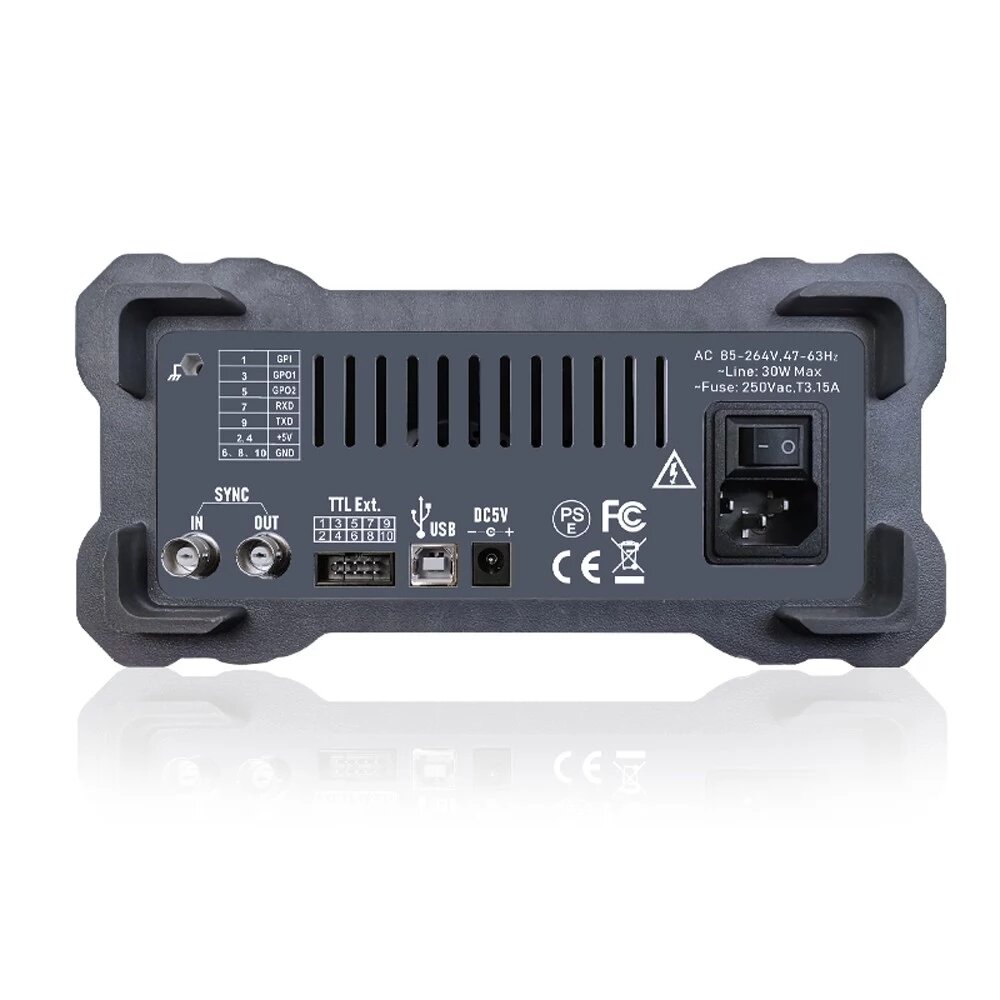
General specifications: Display: Screen: 3.5 inch TFT color LCD display Resolution: 320*480 Color: 64K true color Store and load: Quantity: 100 groups Location: 00 to 99 (The data of 00 storage location is loaded by default) Interface: Interface method: USB to serial interface Extension interface: serial port with TTL level mode, convenient for secondary development Communication rate: standard 115200BPS Protocol: using the command line, the protocol is open Power: AC power: supply voltage: 85V-264V,47-63Hz power consumption: less than 30W fuse: 250VAC, 3.15A DC power: supply voltage/current: DC5V±0.5V 3A Environment: Temperature: 0~40℃ Humidity: humidity<80% Item size: 247 * 243 * 102mm / 9.7 * 9.6 * 4.0in Item weight: 1030g / 2.3lb Package size: 425 * 275 * 215mm / 16.7 * 10.8 * 8.5in Package weight: 1985g / 4.4lb
Arrived before the announced deadline of 1 week. The packaging is intact. The set is 100% + gift TTL bluetooth board B-91 for communication with a smartphone application. The quality of the signals corresponds to those requested by the manufacturer. Extremely easy to set up and operate. The price is lower than the quality of workmanship compared to other brands. For a home laboratory it is more than enough. I am very satisfied. I recommend !
Received, read the manual, and tested - delightful device !
It came with a little plug in Bluetooth device to use an Android phone or pad to control the PSG9080 - which would allow to move the PSG9080 off the bench and control and read it from the Android device instead of its own screen and controls.
I found that Android 7 devices worked with the app to link automatically to the Bluetooth card, but Android 11 did not work. The Bluetooth device shows as BSG045 and if I can get the pairing key for it, can possibly get the Junteks app to connect on Android version 11.
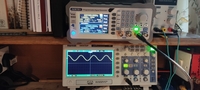
Appreciated that the PSG9070 will happily do frequency sweeping and display the envelope on a modern scope, as a way to determine frequency response curves of tuned circuits.
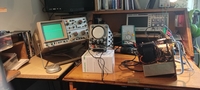
One thing that I want to do is make a helper device to safely present a frequency response curve onto a vintage O'scope. The helper device has to present a very high impedance to the X-sweep output from the scope of 2 Meg Ohms, convert the +250 Volt ..0 Volt triangular waveform to +5V ..-5 V waveform that the PSG9080 inputs as external VCO input. The helper device also has to wideband amplify a signal coming from the DUT, and pass it through a diode to get a low frequency (circa 38 Hz frequency response waveform to feed into the old O'scope's amplifier.). Photo of an old O'scope included..
You might think "Why bother with adapting to vintage gear?". The reason is that modern devices, especially signal generators are far easier to use than old devices, and adapting like this reveals what engineers used to have to work with. It is educational and instructive..
Thank you for a great instrument, and long may it continue to work !




 Roymall C.o.


 უფასო საჩუქარი
 მიტანის პოლიტიკა
 დაბრუნების პოლიტიკა







 Coupon Code
 Direct purchase from the factory
 Tools
Tools Measurement & Analysis Instruments
 Digital Multimeters & Oscilloscope
 Signal Generator